
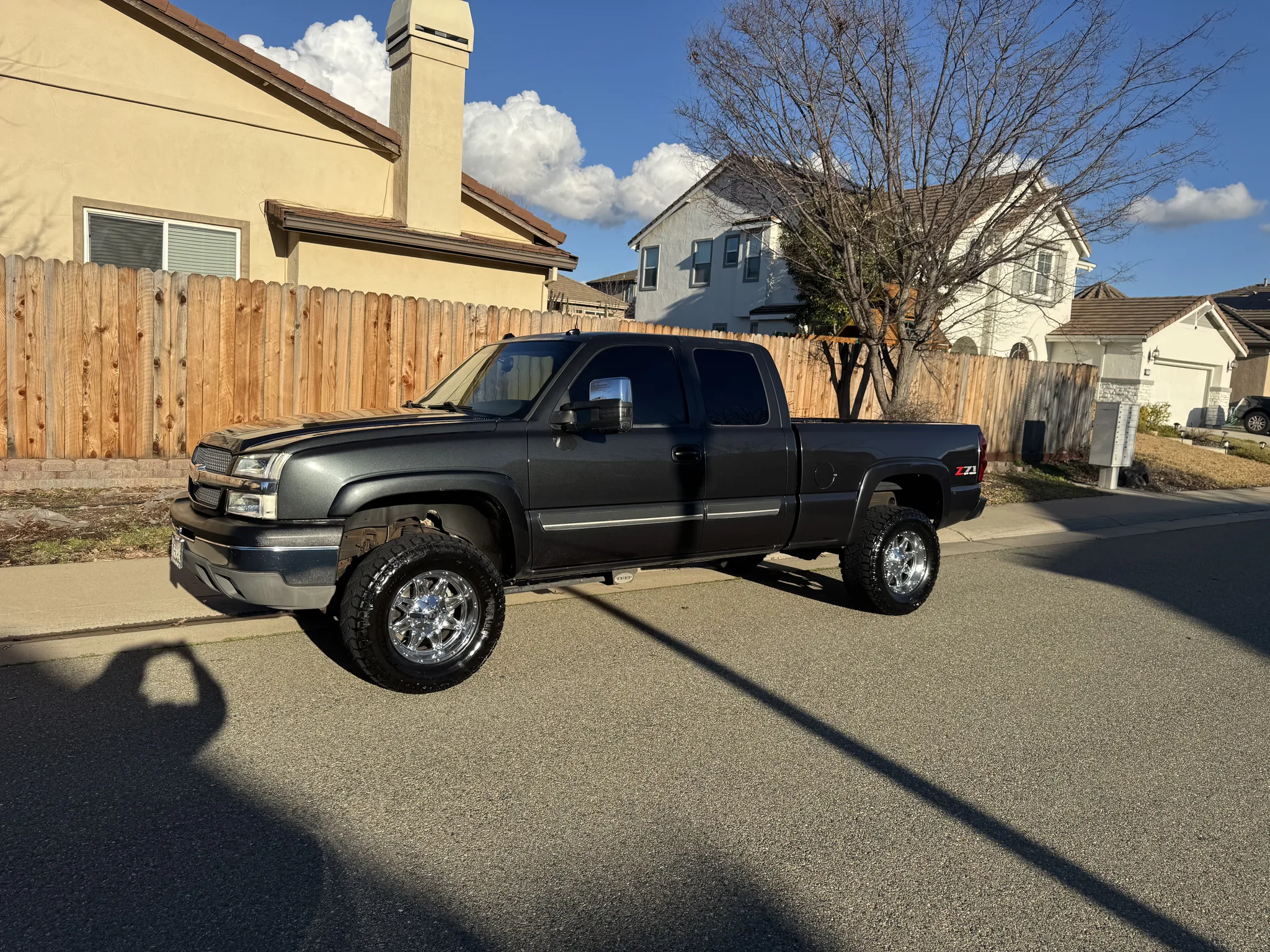
Two 10s, No Cargo Space Lost: Kohen's 2004 Silverado
An extended cab gives you a thin rear wall, a shallow footwell and nowhere obvious to put a subwoofer. This system solves all three without costing a single inch of usable cab space.
- Vehicle
- 2004 Chevrolet Silverado Z71, extended cab
- Goal
- Daily driver / SQL
- Front stage
- Four-way active
- Enclosure
- 2.25 ft³ net, ported, shared chamber, under rear seat
- Electrical
- 400 A alternator, Big 3, 1/0 OFC, 45 Ah LiFePO4
- Treatment
- Rear cab wall and front doors
- Completed
- March 2026
- Install
- David Harrill, co-founder
An extended cab is a specific problem. There is no trunk. The rear seat folds into a space measured in inches. The rear cab wall is a single large sheet of unsupported steel sitting directly behind the listener's head, and it is the first thing that starts moving when a subwoofer does. Whatever system goes into a truck like this has to solve for space, structure and noise at the same time — or it will sound like a loud truck instead of a good one.
Kohen wanted both things this platform usually forces you to choose between. A daily driver that stays quiet and clear on the commute, and real output when he asks for it. That combination is what we call SQL, and it is harder to get right in an extended cab than in almost any other vehicle we work on.
The Truck Came Apart First
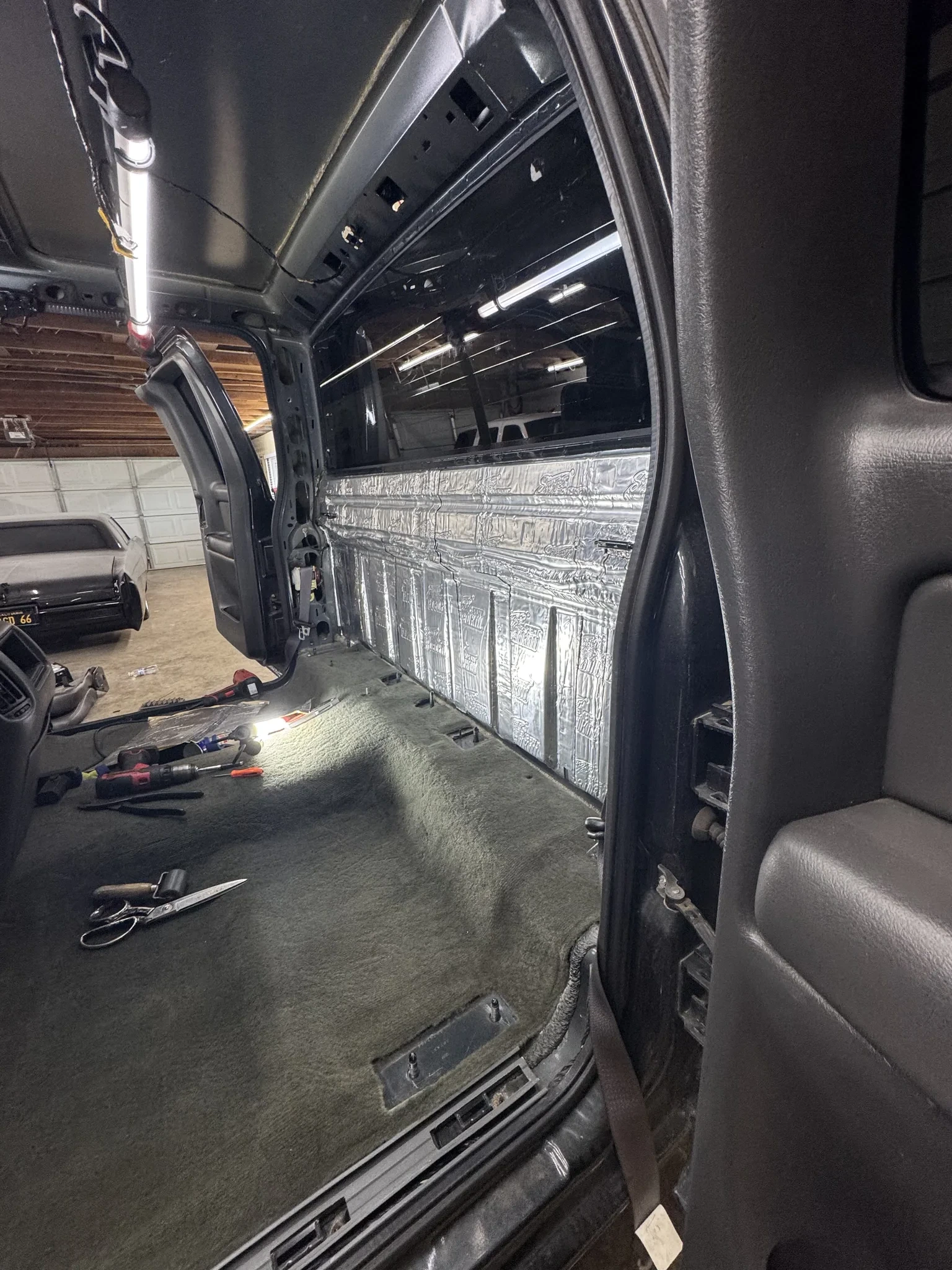
Nothing went in until the cab was empty. Seats out, headliner down, carpet up, rear wall stripped to bare metal. That is the honest starting point for a system like this, and it is the part most builds skip.
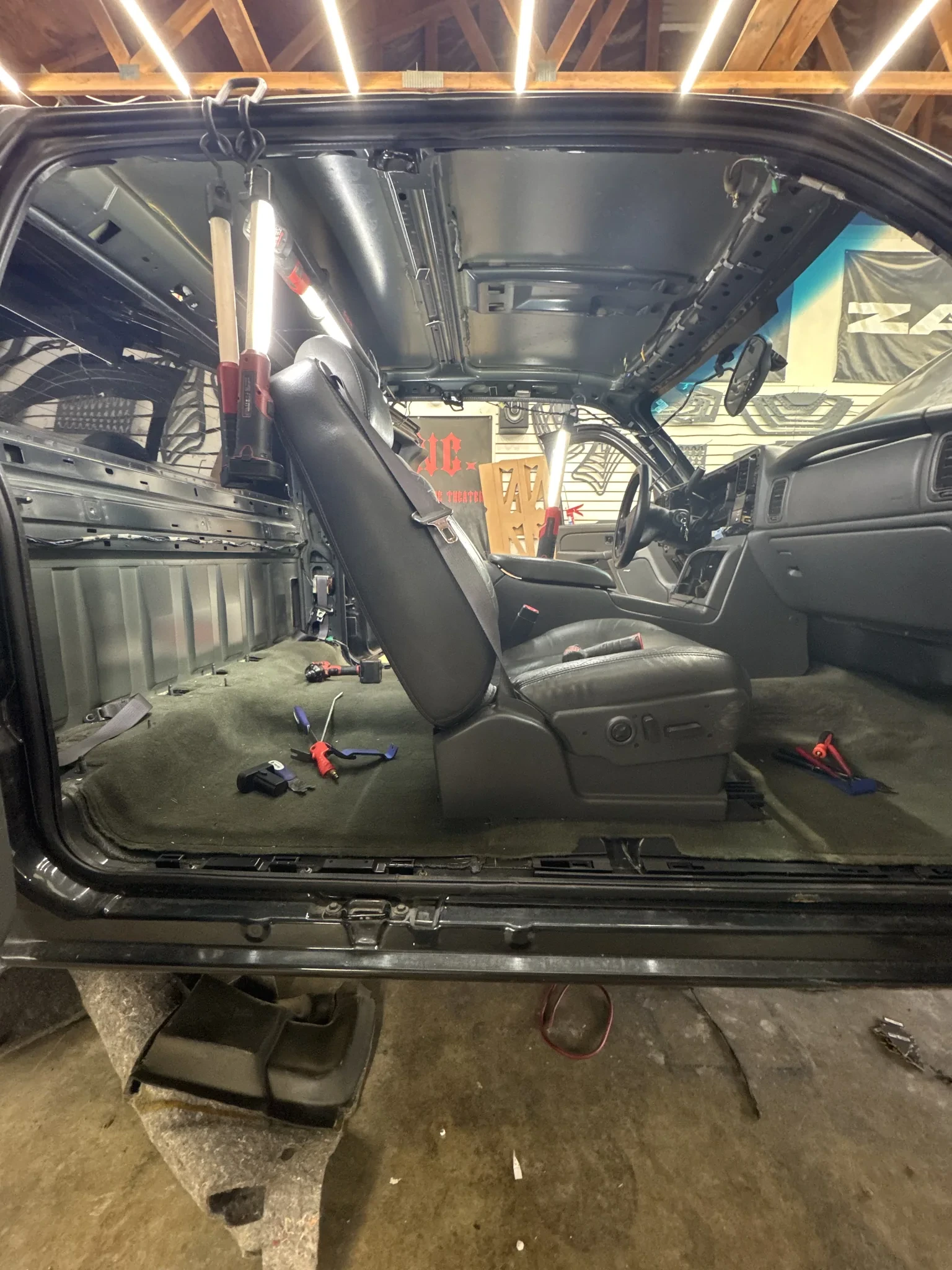
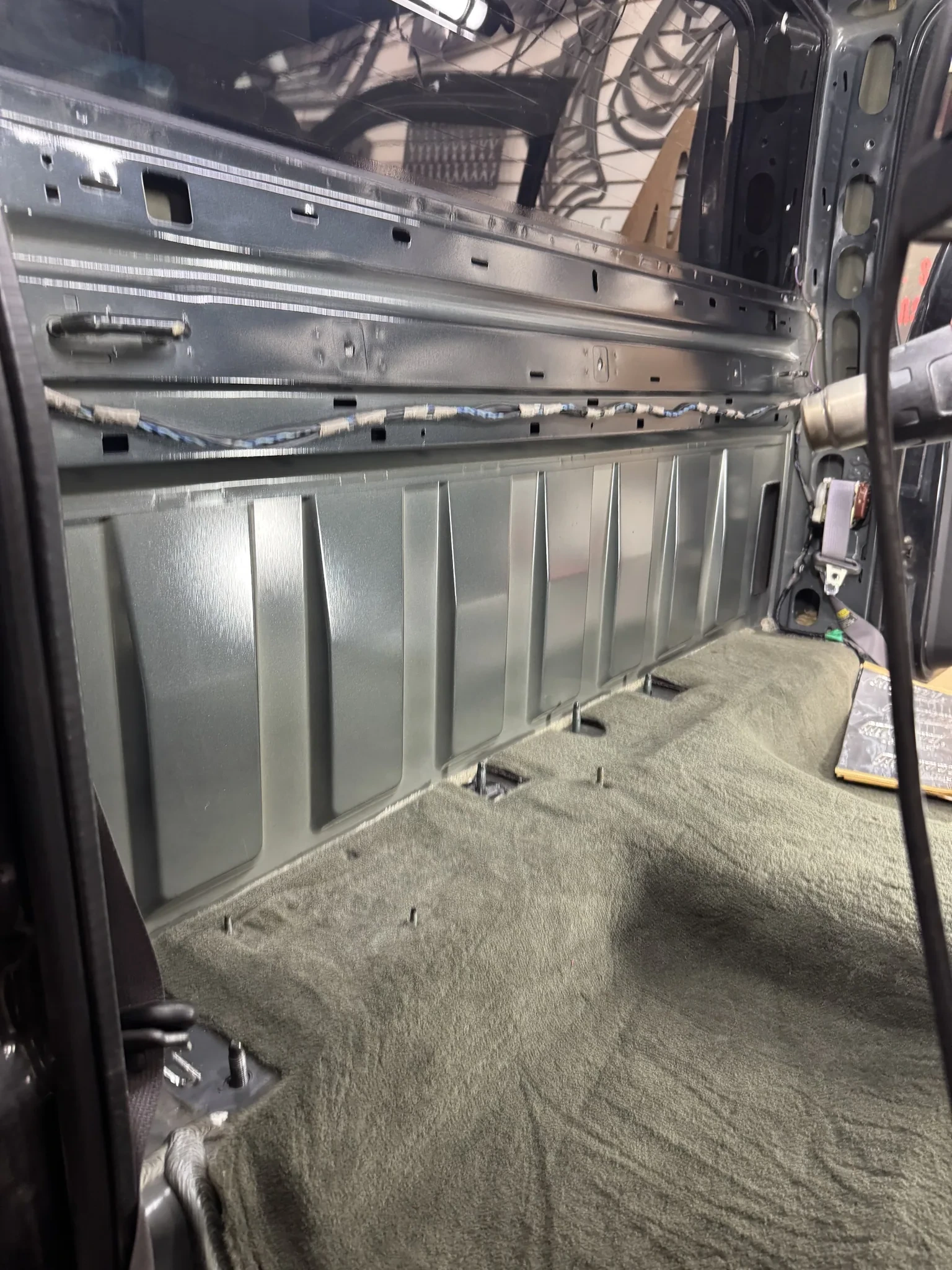
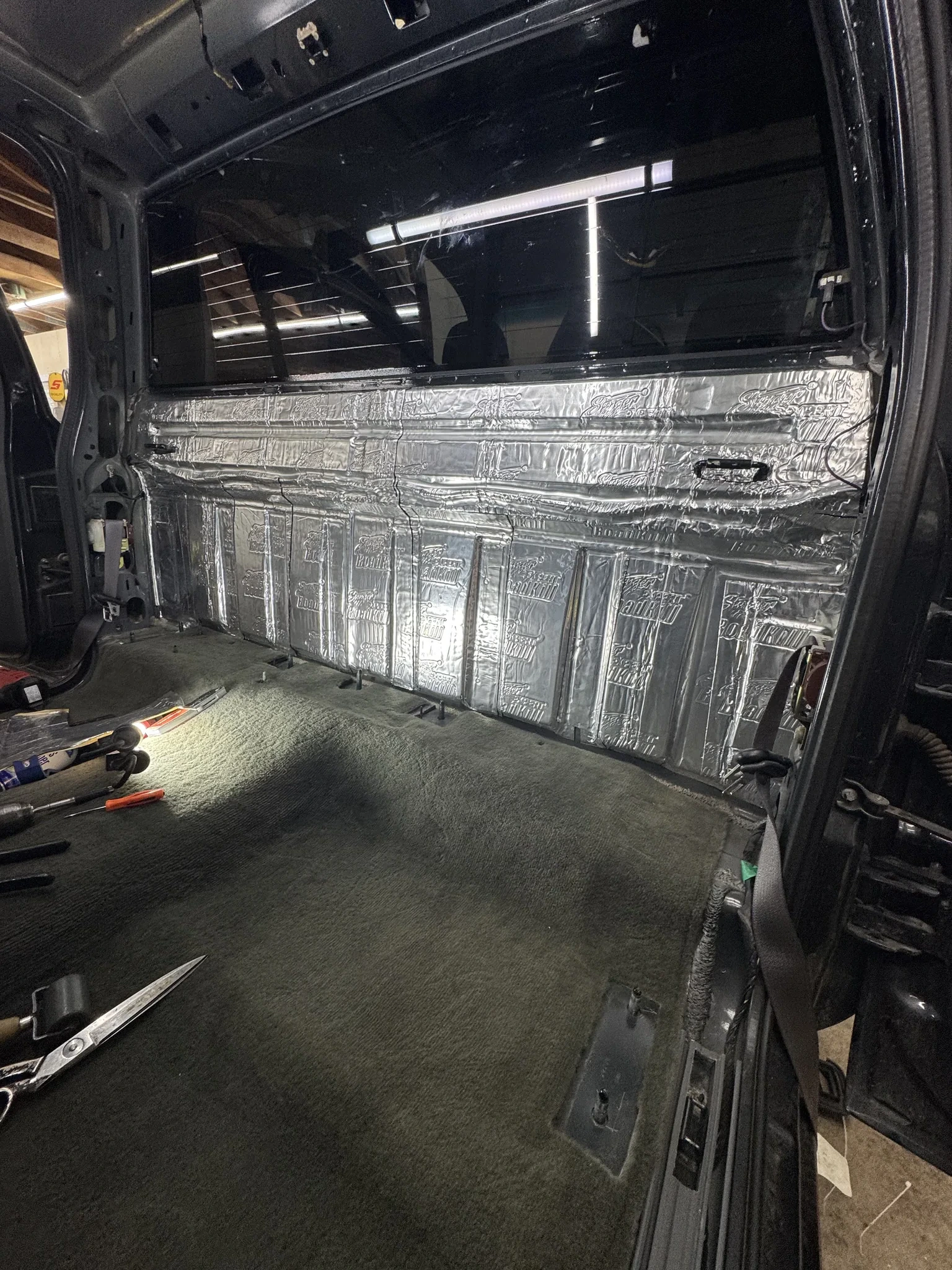
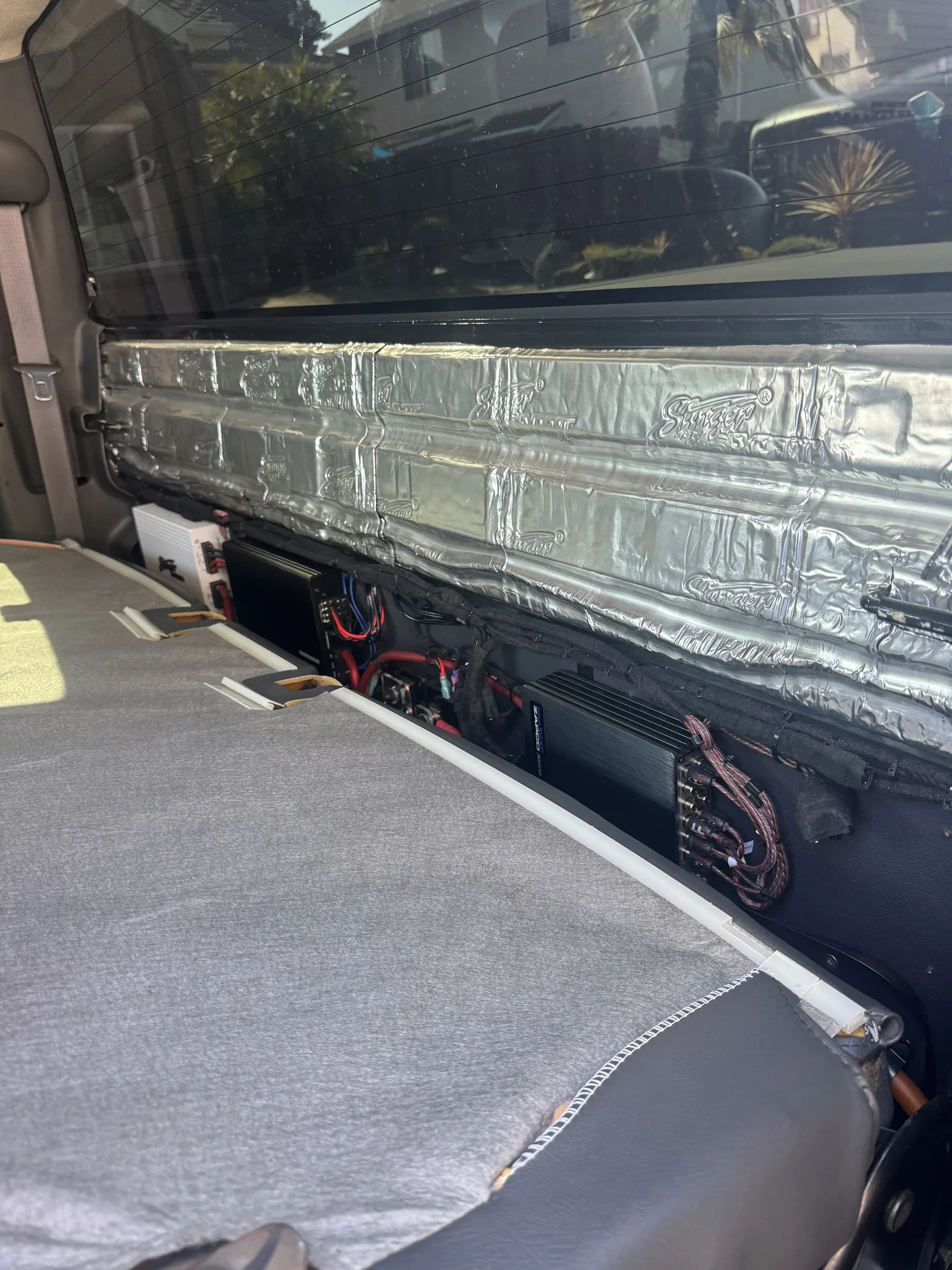
The rear wall received two layers of constrained layer damping — a full lower field plus a second band across the upper structure where the panel is largest and least supported. The doors were treated at the same time, while they were already apart. That timing matters more than the material does. Once a door is disassembled, the labor is already spent; treating it then costs almost nothing extra and benefits every speaker that will ever be mounted in it.
A Four-Way Front Stage That Looks Stock
The front stage runs four ways active: ESB DBBurn DB2-6.5 mid-woofers in the factory door location, ESB 3.25 tweeters in the A-pillars, and AudioControl Epic Pro3NT tweeters in the doors. Every driver sits in an OEM position. Open the door and it reads as a clean factory interior.
The DB2-6.5 was chosen for a specific reason. It is a high-efficiency driver, which means it produces more output for the power it is given. In a system that also has to feed two 10s and stay inside a charging budget, efficiency in the front stage is not a small detail — it is what keeps the whole system in balance.
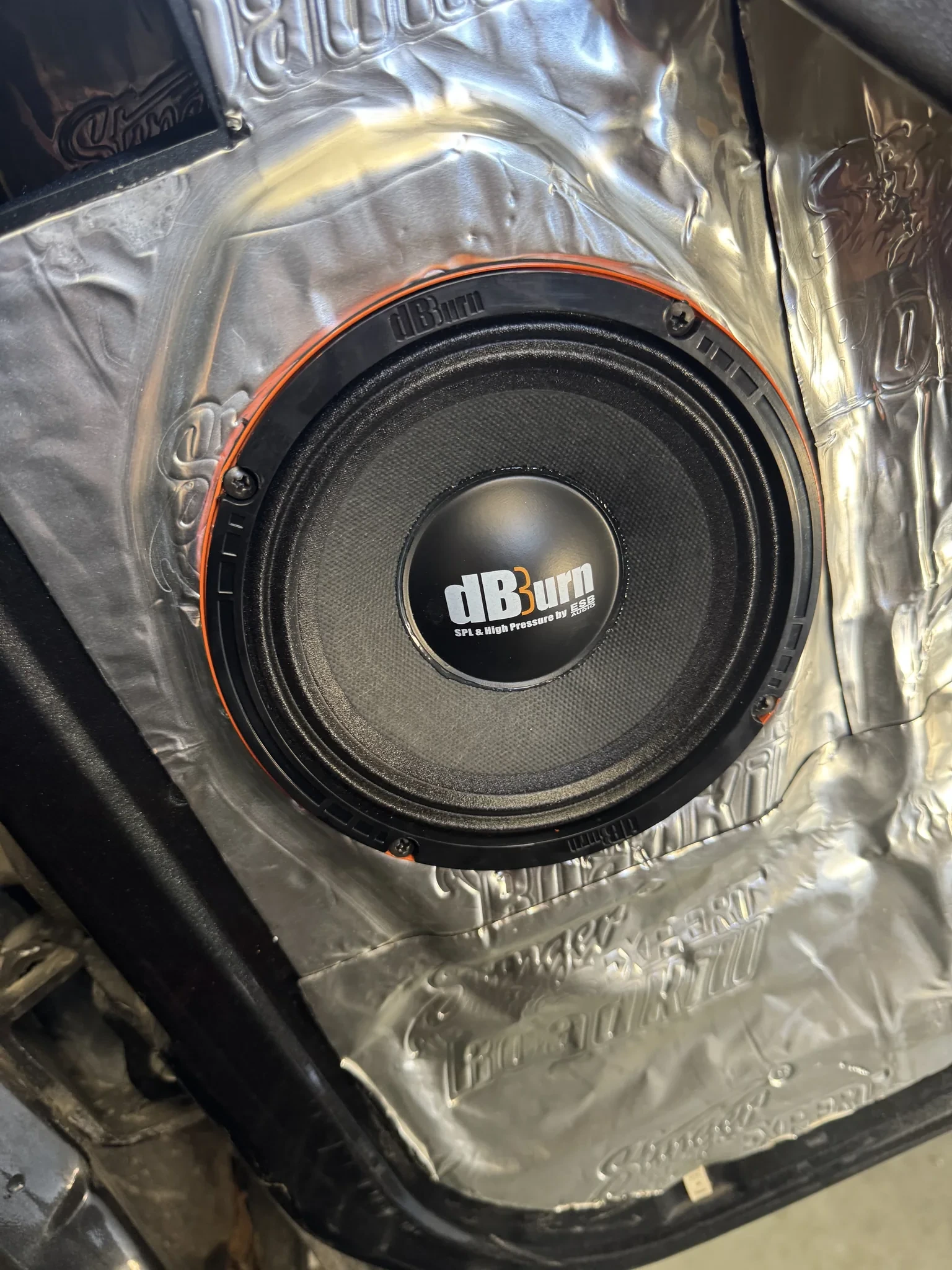
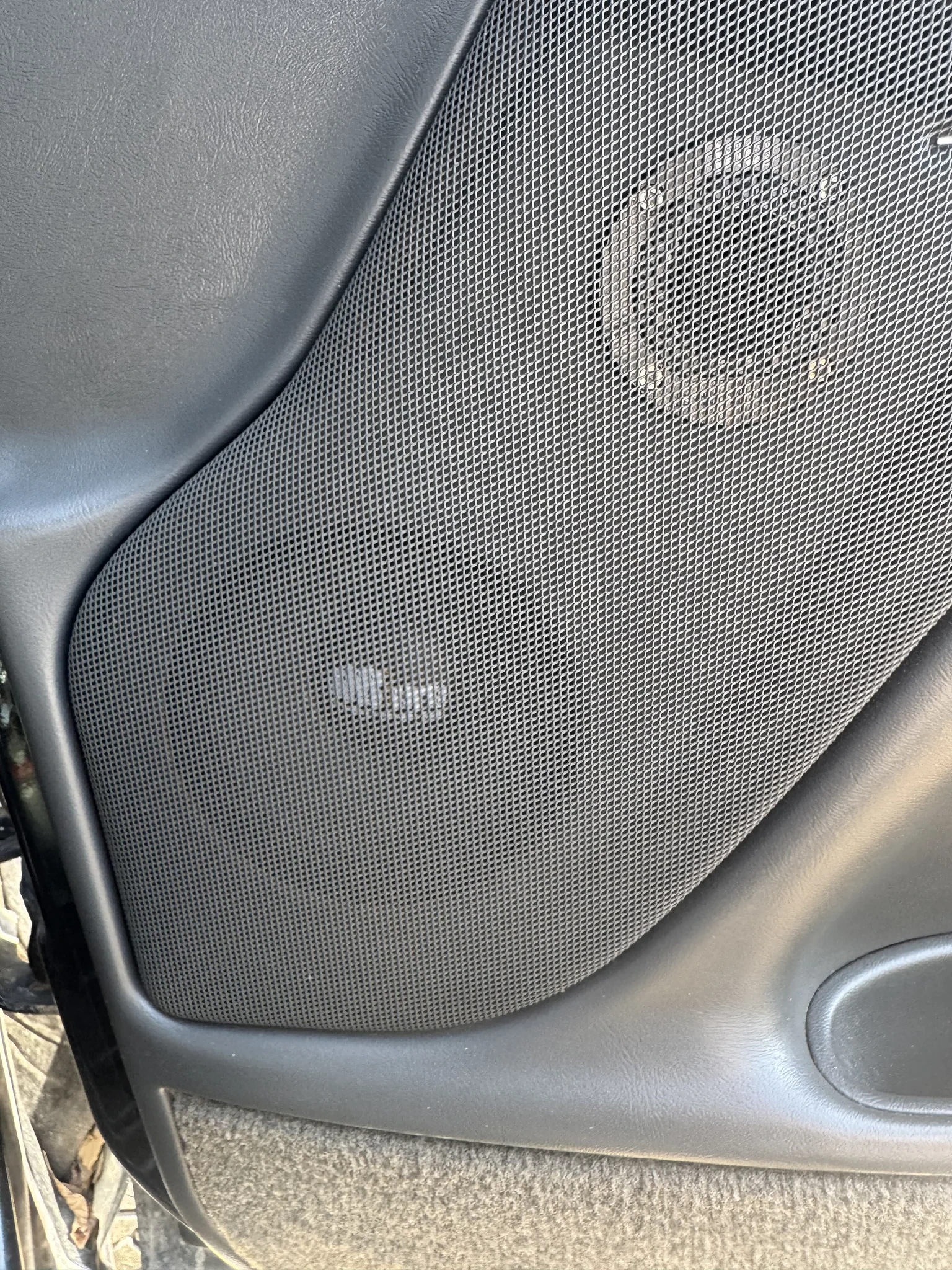
Four ways active means eight channels of amplification and enough processing to time-align and cross over every driver independently. The Zapco HB 810 II 8AD handles that in a single chassis — ten channels of DSP and eight of amplification. In a vehicle with this little space, consolidating processing and amplification into one box is not a convenience. It is the reason the front stage could be four-way at all.
The Enclosure Was Built to the Truck
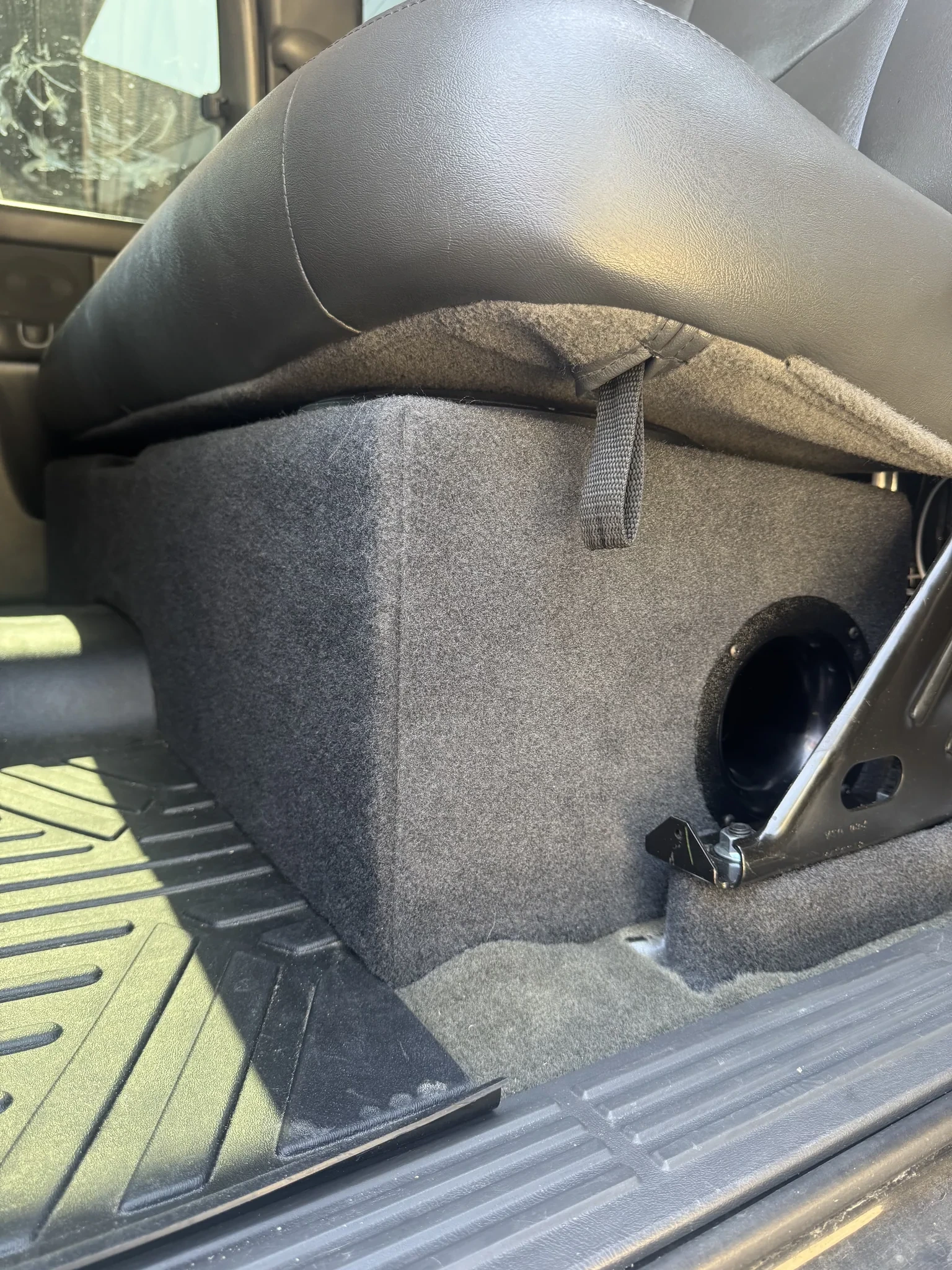
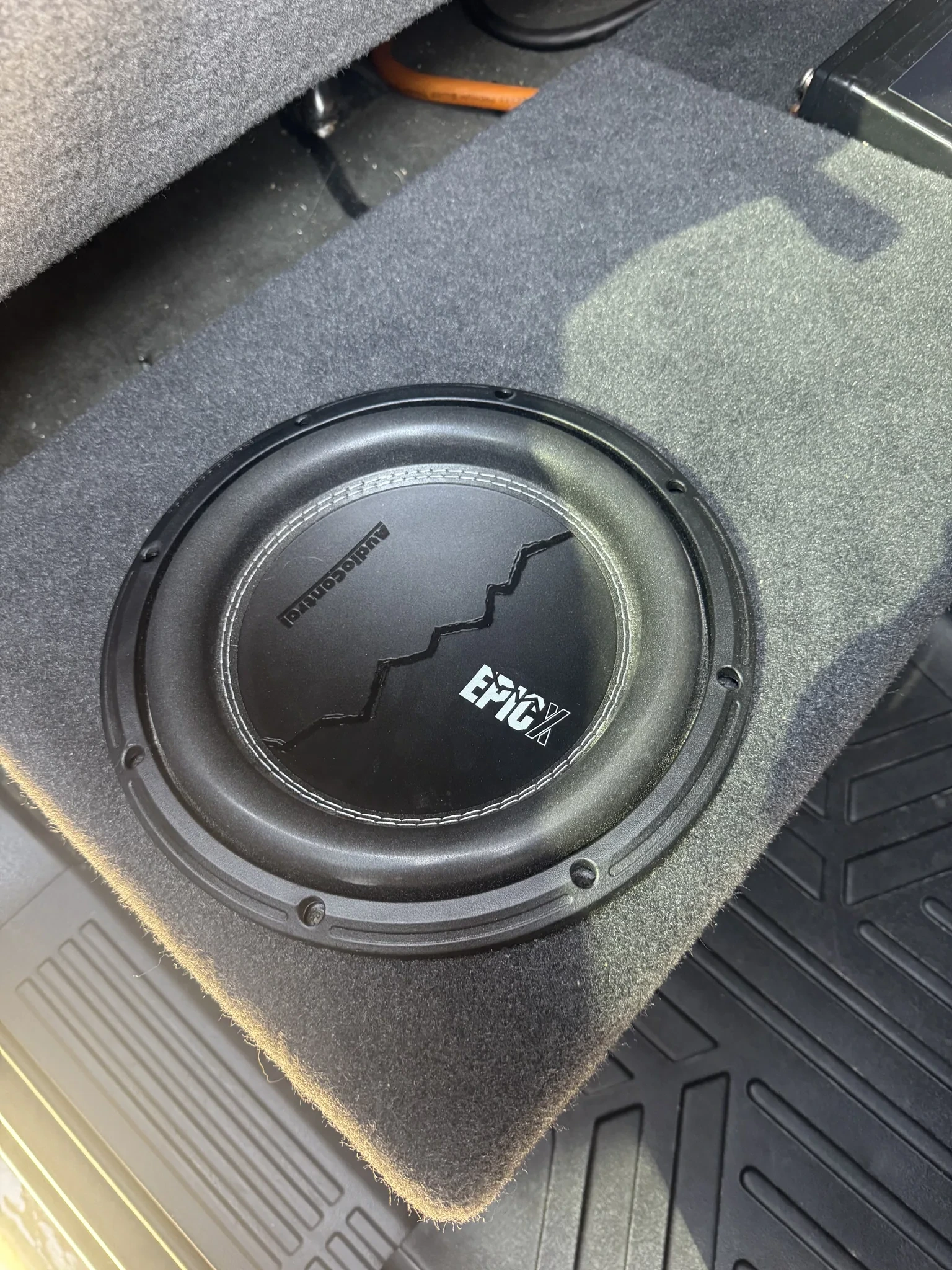
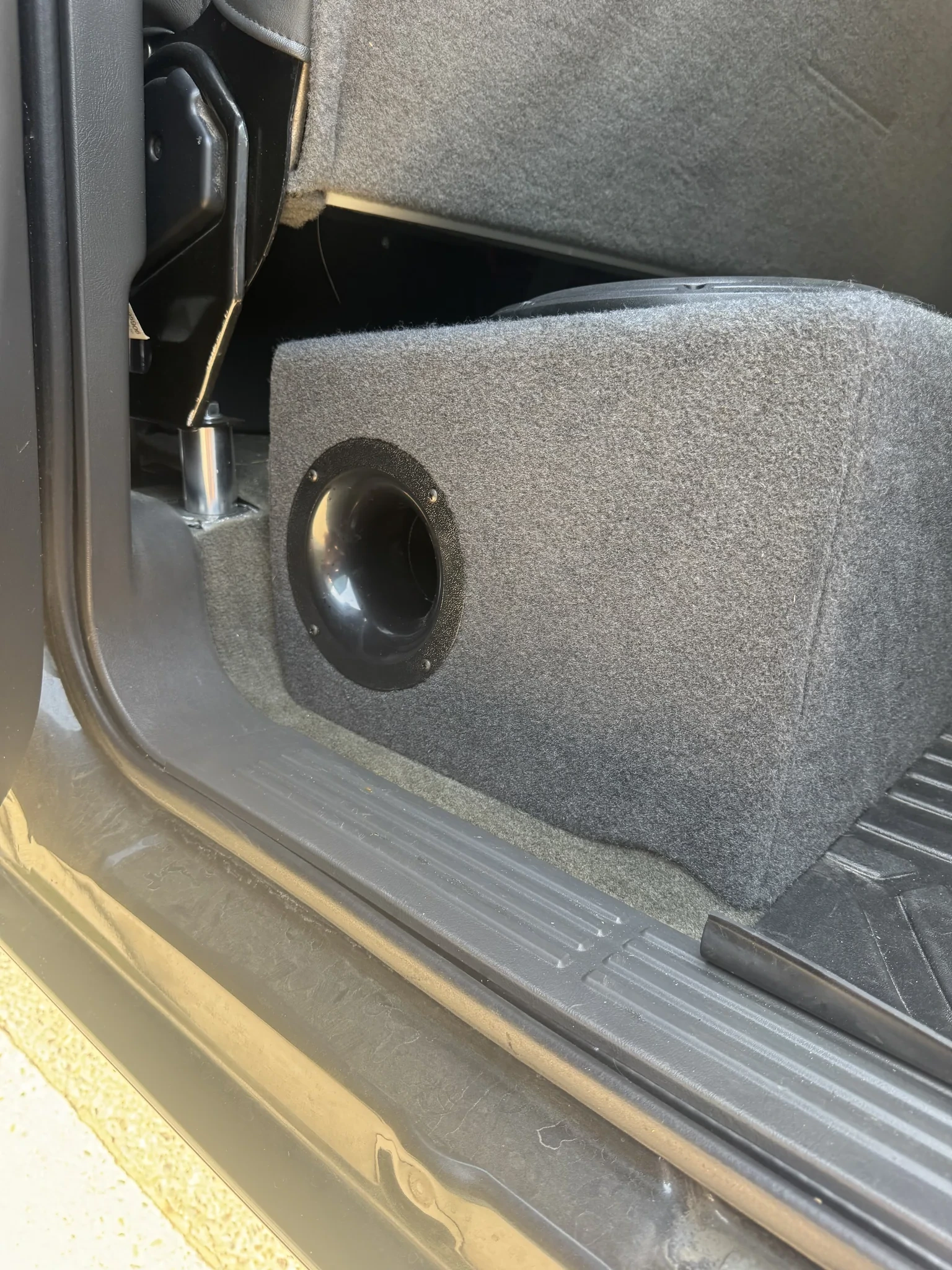
The floor under an extended cab rear seat is not flat. It steps, it curves, and it is interrupted by seat mounts. A rectangular box dropped into that space wastes most of it. So the enclosure was laid up in fiberglass directly to the contour of the cab floor — 2.25 cubic feet net, ported, with both 10s sharing a single chamber and firing upward into the seat base.
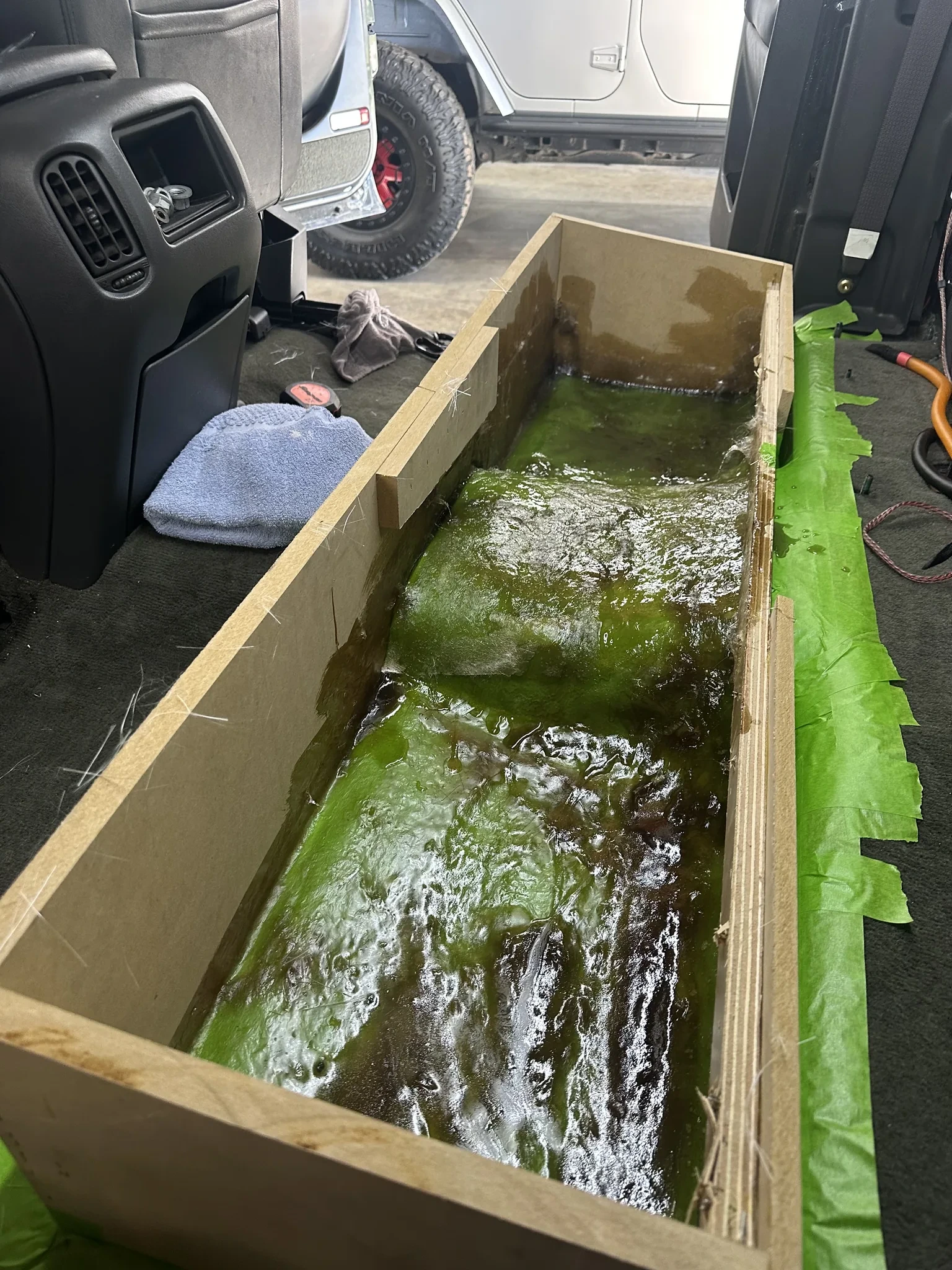
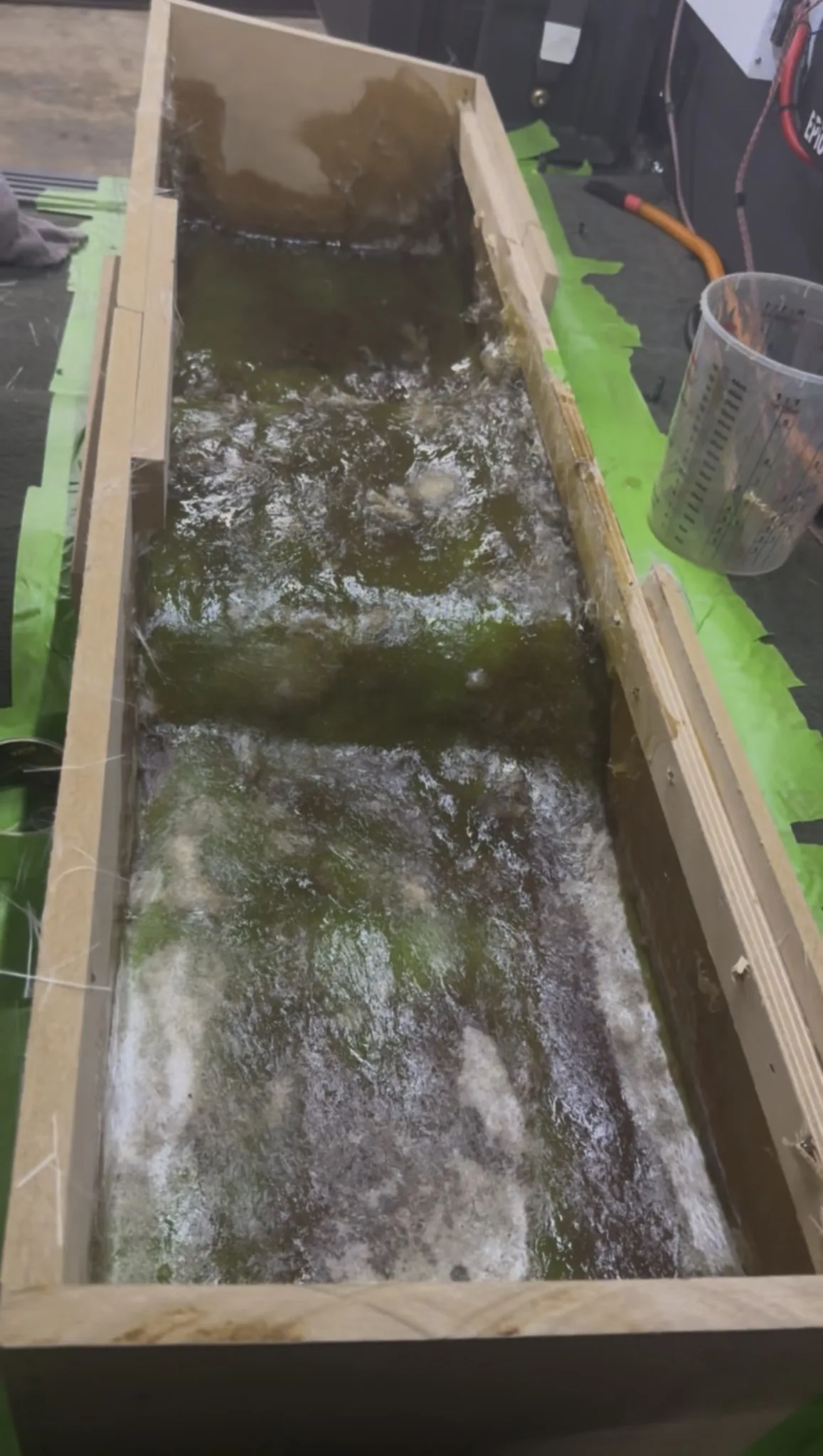
Fiberglass earns its cost here. It follows a shape MDF cannot, and it recovers volume that would otherwise be air gaps around a square box. Every cubic inch it reclaims is volume the subwoofers actually get to use.
The finished enclosure carpets over and disappears. The rear seat still folds down. The floor is still usable. The port exits at the end of the box near the door sill, and the whole assembly reads as a factory storage tray until you look twice.
Electrical Sized for the Load, Not for the Photo
A 400 amp Mechman alternator, the Big 3 upgraded, and 1/0 OFC power and ground front to back. Protection is an SMD ANL block near the battery. The storage is a 45 Ah LiFePO4 pack from No Limit Lithium, and it is mounted on top of the enclosure lid rather than eating its own patch of floor.
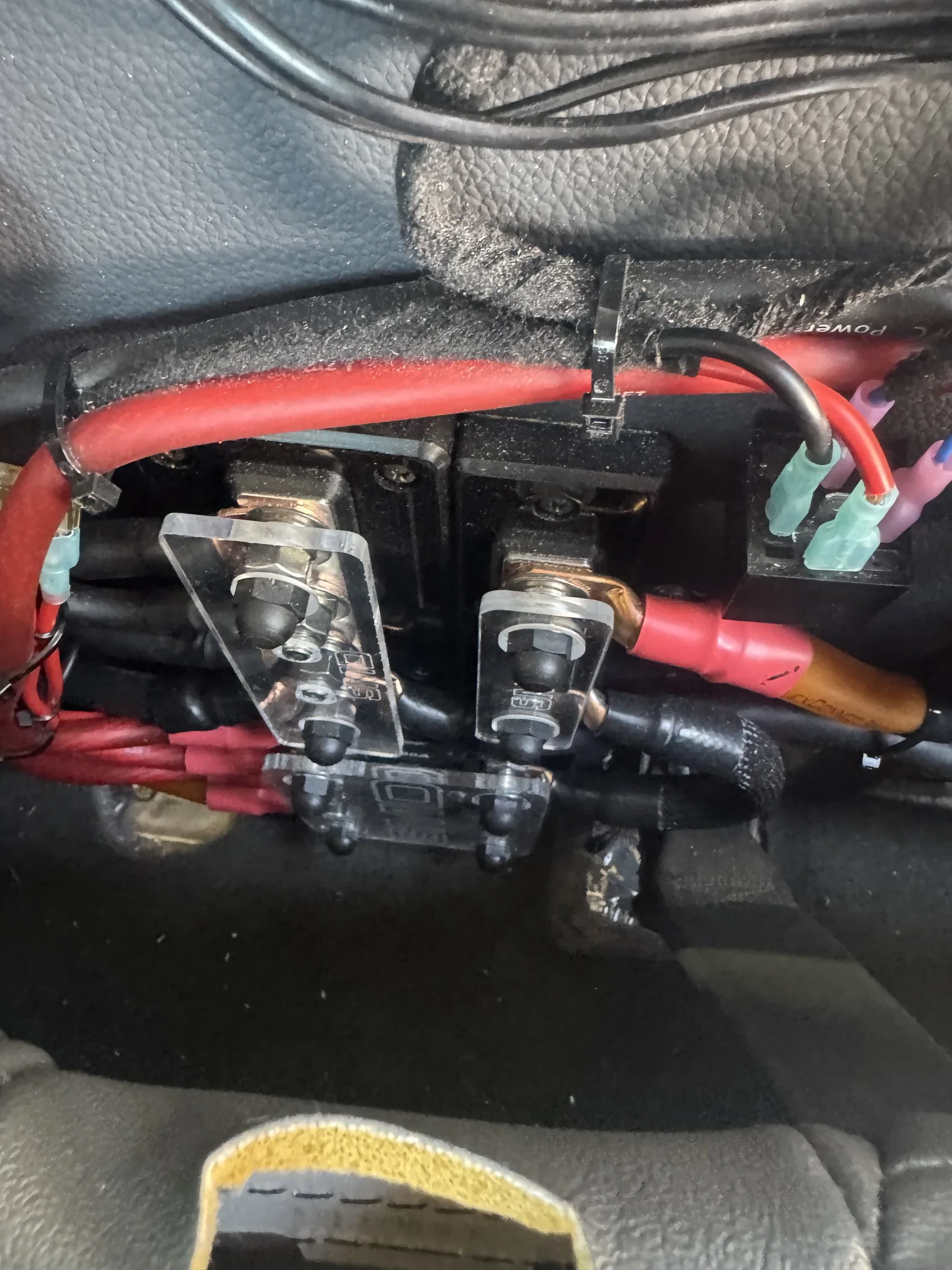
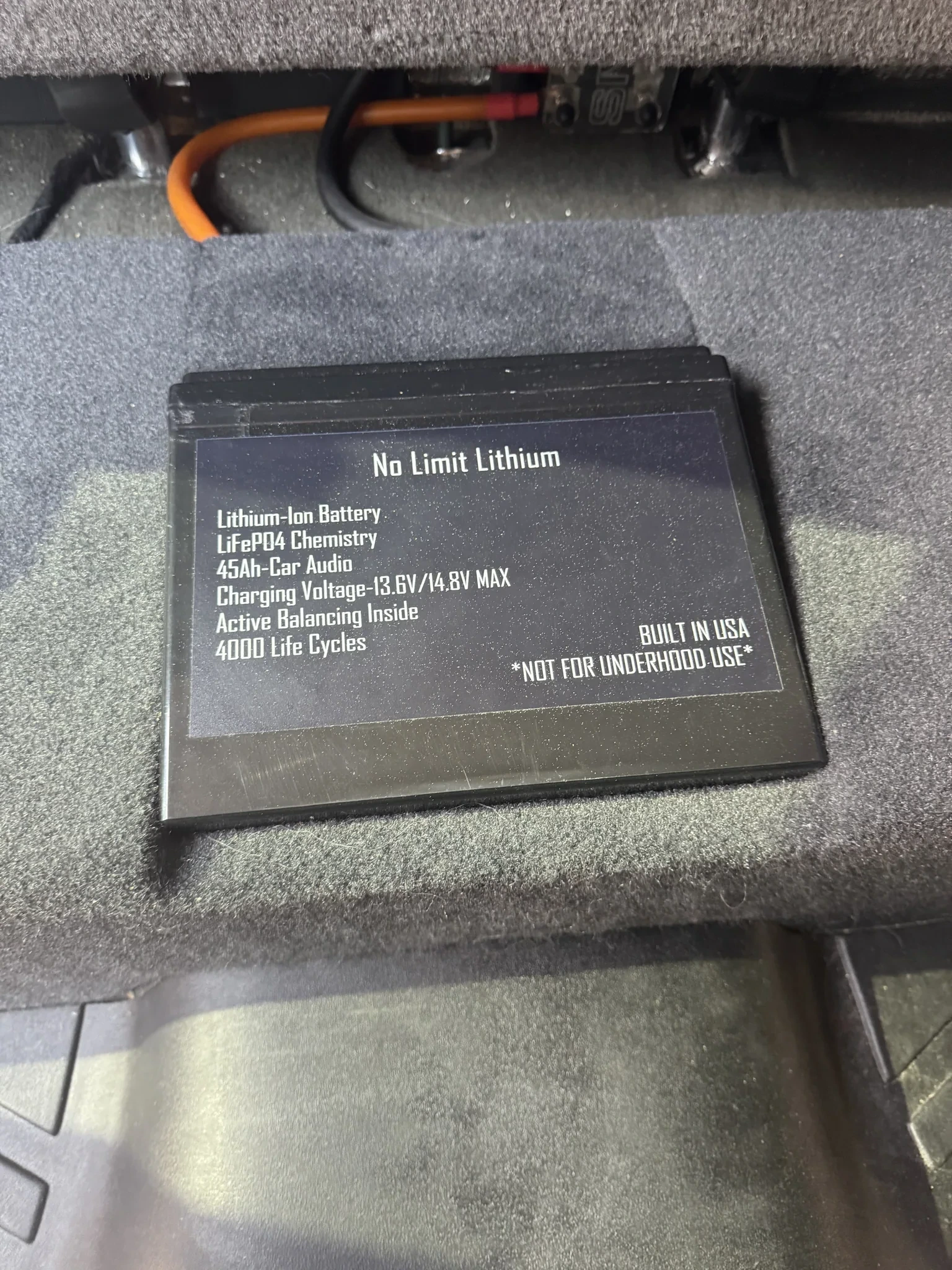
That mounting decision is worth pausing on. In a vehicle with this little room, where the battery goes is a system design question, not an afterthought. Putting it on a surface that already exists is the difference between a system that fits and one that slowly consumes the cab.
The Amp Rack
All three amplifiers mount to a single panel along the rear wall, behind the seat backs. The Zapco, the AudioControl EPICBIGFOUR and the Stinger MT-1800.1 sit in one plane with wiring loomed and routed above them. Power runs one side of the cab, signal the other.
What Makes It Work
Nothing in this truck is the largest version of itself. The subwoofers are 10s, not 15s. The enclosure is 2.25 cubic feet, not five. The front stage uses a 6.5-inch mid-woofer in a factory opening. What the system has instead is agreement — a high-efficiency front stage that does not demand more current than the charging system can give, an enclosure sized to the space that actually exists, and processing capable of making four-way active behave like one coherent source.
That is what SQL means in a daily driver. Not the biggest numbers available, but the largest system this particular truck can support while still being a truck you drive to work.
- SourceStinger iE268
6.8-inch double DIN with wireless CarPlay and Android Auto, plus onboard DSP with a 13-band EQ and crossover filters.
- Processing and amplificationZapco HB 810 II 8AD
Ten channels of processing and eight of amplification in one chassis. The reason a four-way active front stage fits behind a rear seat panel.
- Front stage amplificationAudioControl EPICBIGFOUR
1400 W RMS across four channels, 2-ohm stable.
- Subwoofer amplificationStinger MT-1800.1
- Front midbassESB Audio DBBurn DB2-6.5
High-efficiency 6.5-inch mid-woofer in the factory door location. Chosen for output per watt, not just output.
- Front tweeterESB Audio 3.25
One-inch silk dome in the A-pillar, using the factory location. Nothing about the front stage announces itself from outside the truck.
- Door tweeterAudioControl Epic Pro3NT
- SubwoofersAudioControl EPIC X 10-inch (×2)
Mounted up-firing under the rear seat.
- EnclosureCustom Custom fiberglass ported enclosure
2.25 ft³ net, shared chamber, built to the contour of the cab floor by David Harrill.
- ChargingMechman 400 A alternator
- StorageNo Limit Lithium 45 Ah LiFePO4
Mounted on the enclosure lid rather than taking up separate floor space.
- DistributionSMD ANL fuse block
- TreatmentStinger RoadKill
Rear cab wall in two layers, plus door skins.
Linked components are available from HF Audio Labs. Unlinked components are listed for completeness and are not sold by us.